“Vetus” si traduce in italiano soprattutto con “vecchio”, “antico” o “vecchia”, secondo il genere e il contesto della frase. L’espressione latina Urbs Vetus significa letteralmente “città vecchia” o “città antica”; nella forma Vetus Urbs, invece, il significato resta sostanzialmente “città antica”, con una diversa disposizione delle parole.
La traduzione di vetus urbis richiede però attenzione, perché vetus e urbis appartengono a costruzioni grammaticali diverse. Vetus è un aggettivo latino che significa “vecchio” o “antico”, mentre urbis è il genitivo singolare di urbs, cioè “della città”. In senso letterale, quindi, vetus urbis può essere interpretato come “il vecchio della città” oppure “l’antico della città”, ma non equivale direttamente alla locuzione Urbs Vetus, che significa “città vecchia”.
Traduzione italiana di vetus
Le traduzioni più comuni di vetus in italiano sono “vecchio”, “antico” e “vecchia”. Il significato preciso dipende dal sostantivo a cui l’aggettivo si riferisce e dal contesto in cui compare.
| Forma latina | Traduzione italiana |
|---|---|
| vetus | vecchio, antico, vecchia |
| urbs vetus | città vecchia, città antica |
| vetus urbs | città vecchia, città antica |
| urbis | della città |
| vetus urbis | il vecchio della città, l’antico della città |
Il latino distingue il valore dell’aggettivo in base al nome accompagnato. Vetus è una forma usata con sostantivi di genere maschile e femminile al nominativo singolare, mentre vetus è anche la forma del neutro singolare. L’aggettivo appartiene alla terza declinazione.
Tra le traduzioni meno frequenti di vetus compaiono “anziano”, “attempato”, “decrepito”, “maggiore”, oltre alle forme italiane “vecchi” e “vecchie” quando il contesto richiede il plurale.
Esempi di traduzione dal latino
Computatorium meum vetus est. Proximo mense novum per rete emam.
La traduzione italiana è: “Il mio computer è vecchio. Il mese prossimo ne comprerò uno nuovo su Internet.”
Laudamus veteres, sed nostri utemur annis.
La traduzione italiana è: “Lodiamo i tempi antichi, ma sappiamoci muovere nei nostri.”
In questi esempi il significato di vetus varia in base al sostantivo sottinteso o espresso. Nel primo caso indica qualcosa di non nuovo; nel secondo richiama invece un passato remoto o tempi antichi.
Urbs Vetus e Vetus Urbs
Urbs Vetus è la locuzione latina più immediatamente traducibile con “città vecchia” o “città antica”. Urbs significa “città”, mentre vetus significa “vecchia” o “antica”.
La forma Vetus Urbs presenta gli stessi elementi lessicali in ordine inverso e può essere resa anch’essa con “città vecchia” o “città antica”. Il significato dell’espressione dipende dunque soprattutto dal contesto storico e dalla funzione che la locuzione assume come nome di luogo o denominazione tradizionale.
L’espressione Urbe Vetus, invece, contiene urbe, ablativo singolare di urbs, e può essere interpretata, secondo la costruzione, come “dalla città vecchia”, “nella città vecchia” o “con la città vecchia”. Non è quindi la stessa forma grammaticale di Urbs Vetus.
| Espressione | Significato principale |
|---|---|
| Urbs Vetus | città vecchia, città antica |
| Vetus Urbs | città vecchia, città antica |
| Urbe Vetus | dalla città vecchia, nella città vecchia, con la città vecchia |
| Vetus Urbis | il vecchio della città, l’antico della città |
Il rapporto tra Urbs Vetus e Orvieto
L’interesse per l’espressione Urbs Vetus è legato anche all’origine del nome della città di Orvieto. L’etimologia di Orvieto è ancora discussa e non del tutto chiarita, ma una delle interpretazioni più note la collega al latino Urbe Vetus, cioè “città vecchia”.
Quasi casualemente, da una conversazione amichevole nata su facebook con il mio amico Fabrizio “Rasna” Baldi, ho scoperto una cosa abbastanza curiosa. Il tutto nasce dal mio interesse per l’origine del nome della Città di Orvieto (per molti ancora non chiaro e molto dibattuto quindi eviterei di approfondire ora e qui questo argomento), dal latino “Urbe Vetus“, ovvero Città Vecchia.
Curiosamente, andando ad esplorare nei dintorni di Orvieto, in direzione del Tirreno, in quella terra, sospesa tra Lazio e Toscana, denominata “Tuscia“, ecco che con grande stupore troviamo altre “Vecchie Città”. Infatti, partendo da sud, ecco Civitavecchia, che non ah bisogno nemmeno di troppe traduzioni.
Spostandoci più a nord ecco Viterbo, che ho scoperto derivare dal latino “Vetus Urbe“, per poi terminare, ancora una volta sulla costa con Orbetello, “Urbs Vetuli”. Altra città antica risulta essere Vetralla, il nome si ritiene derivi dal latino Vetus aula (Antico luogo) o da Vetus alia (altra città (sottointeso) vecchia con riferimento a Viterbo (Vetus urbs).
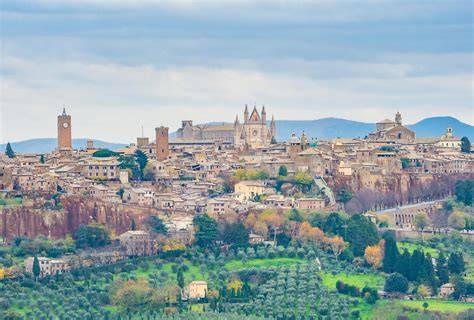
Le città antiche della Tuscia
Secondo questa interpretazione, diversi toponimi della Tuscia conserverebbero un riferimento all’idea di città antica o città vecchia. Il collegamento riguarda Orvieto, Viterbo, Civitavecchia, Orbetello e Vetralla, anche se le loro etimologie non hanno tutte lo stesso grado di certezza.
Questo territorio quindi potrebbe essere denominato oltre che Tuscia anche “Tera delle Antiche Città”. Questo porterebbe al superamento delle difficoltà di indentificazione della Tuscia, dovute a secoli di stravolgimenti militari, che hanno visto cambiare nel corso dei secoli, l’unità territoriale della Tuscia, compromessa definitivamente con la crisi dell’Impero Romano, e suddivisa con il tempo in Tuscia et Umbria, per poi suddividersi in Tuscia longobardorum, suddivisa poi in Ducato di Tuscia, la parte occidentale e Ducato di Spoleto, la parte orientale e la Tuscia Romana a Sud.
Particolare di non poco conto, Viterbo, capitale dell’odierna Tuscia all’epoca non faceva parte della “Tuscia romana”.
Orvieto e la denominazione “città vecchia”
Orvieto, situata su una rupe di tufo, è stata identificata da alcuni studiosi con l’antica Urbs Vetus. L’interpretazione si basa sia sul significato del nome sia su testimonianze storiche relative a una città fortificata collocata in una posizione naturalmente difesa.
Orvieto, the probable site of Urbs Vetus Since the time of Karl Müller (referenced below), some scholars have suggested that the situation at Volsinii in 264 BC was probably similar to that at Falerii some 23 years later: on this latter occasion, the Romans destroyed the old city and moved its citizens to a less easily defended site on the plane below.
The old city was repopulated in the 8th century AD, when its more easily defended position had obvious attractions. However, Roman Falerii continued to exist, so the repopulated city adopted a new name, Civita Castellana.
On this theory, pre-Roman Volsinii was repopulated in similar circumstances and given a new name, “Urbs Vetus”.
Le testimonianze storiche su Urbs Vetus
Le vicende storiche di Volsinii e di Urbs Vetus offrono alcuni elementi a sostegno dell’ipotesi che le due città possano essere state collegate. Le fonti ecclesiastiche mostrano infatti una variazione nelle denominazioni delle sedi vescovili tra il V e il VI secolo.
The diocesan histories of “Volsinii” and “Urbs Vetus” provide some support for this hypothesis: ✴In 494, Pope Gelasius I wrote to Secundino, whom he addressed as “ep. Vulsinien” (bishop of Volsinii, i.e. Bolsena). ✴In 590, Pope Gregory I wrote to Giovanni, whom he addressed as bishop of “Urbe vetere”.
Giovanni’s successor, Candidus, appears in the papal registers shortly thereafter: •in 591, as bishop of “Urbe vetere”; •in 595, as bishop of “civitas Bulsinensis”; and •in 596, as bishop of “Urbe veteri maior”.
It seems therefore that Urbs Vetus had grown in importance and achieved diocesan status during the 6th century, and that it was merged (possibly as the senior partner) with the older and probably adjacent diocese of Volsinii in ca. 596 AD.
La città descritta da Procopio
Una delle testimonianze più importanti proviene da Procopio di Cesarea, che descrisse l’assedio e la conquista di una città chiamata Urviventus durante le guerre gotiche in Italia. Il nome è stato interpretato da alcuni studiosi come una possibile deformazione di Urbs Vetus.
We have two accounts of the travails of an Etruscan city called Urbs Vetus in the 6th and early 7th centuries: ✴Procopius of Caesarea, in his account of the Emperor Justinian’s wars against the Goths in Italy, described Belsarius’ siege and capture of Οὐρβιβεντὸς (Urviventus, probably a corruption of “Urbs Vetus”) in 538 AD:
“Belisarius went round the city to see if he could spy out any place suitable for an assault, but came to the conclusion that it was impregnable by open attack, though it might perhaps be taken by some well-contrived stratagem. For it rises, a solitary hill out of a hollow country, evenly sloping and level above, but precipitous below.
But round this hill other cliffs of the same height range themselves in a circle, not in the immediate neighbourhood, but about a stone's throw distant. On this hill, the men of old founded a city, but did not surround it with walls or any other kind of fortification, thinking that Nature had herself made it impregnable.
For there is only one way of access to it from the heights and, if this is guarded, the defenders need fear attack from no other quarter. For round all the rest of the city, except this one point, runs a broad and unfordable stream filling up the chasm between the city and the surrounding eminences.
A little fortress was accordingly erected by the Romans of old at this point of access, and in it is a postern gate that was guarded by the Goths. Belisarius therefore ranged all his army round the city, on the chance of effecting something against it by the way of the river, but having also some hope that the enemy would be compelled to surrender by hunger”.
This, apparently, is what actually occurred.
Il riferimento di Paolo Diacono
Anche Paolo Diacono menziona Urbs Vetus nella sua Historia Langobardorum, descrivendo le conquiste longobarde in Italia bizantina all’inizio del VII secolo.
✴Paul the Deacon, in his “Historia Langobardorum”, summarised the Lombard attack on Byzantine Italy in ca. 605-10 AD as follows: “Afterwards . [the Lombard] king Agilulf made peace with Smaragdus the [Byzantine] patrician for one year, receiving from the Romans 12,000 solidi. Cities of Tuscany too, i.e. Balneus Regis and Urbs Vetus, were seized by the Lombards. Afterwards king Agilulf again made peace with the Romans for 3 years” .
Il riferimento a una città toscana chiamata Urbs Vetus è stato considerato compatibile con Orvieto, anche se l’identificazione non è priva di difficoltà.
Gli argomenti a favore dell’identificazione con Orvieto
This city could conceivably have been Orvieto: excavations of the city reveal that it had, indeed, been repopulated at some time in the 6th century.
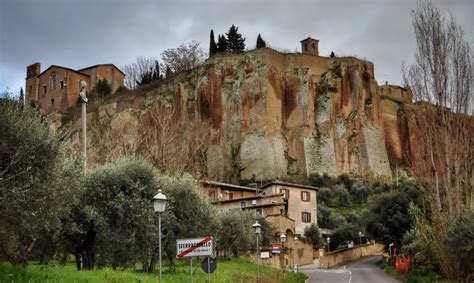
Indeed, Procopius’ assertion that “there is only one way of access to [Urbs Vetus] from the heights” is very suggestive of Orvieto, where the present Via della Cava, which has been created by excavating a passage through a natural cleft in the surrounding tufa, provides the only easy access to the city.
Procopius goes on to say that: “A little fortress was accordingly erected by the Romans of old at this point of access, and in it is a postern gate that was guarded by the Goths”.
In fact, a stretch of wall was found in a house in Via della Cava in 1965, when a torrential storm caused subsidence. Further excavation revealed eight courses of tufa blocks that had been used to build it against the natural rock without the use of mortar.
It seems likely that this stretch of wall, which actually pre-dated the Romans, was part of the fortified entrance to the ancient city. Its orientation in relation to Via della Cava suggests that there may well have been a gate here.
Thus a reasonable case can be made for the identification of Orvieto as the Urbs Vetus of Procopius and thus, probably, of Paul the Deacon too.
Le difficoltà dell’ipotesi Orvieto
L’identificazione di Orvieto con Urbs Vetus non è tuttavia unanimemente accettata in modo assoluto. Le descrizioni antiche presentano infatti alcuni elementi che non coincidono perfettamente con la conformazione geografica della città moderna.
However, as George Dennis made clear in a footnote to the account quoted above, there are problems associated with this theory. He was specifically concerned about Procopius’ statement that the hill on which Urbs Vetus stood was “surrounded by rocks of equal altitude, not quite close, but about a stone's throw distant . ”
This, he claimed, “is not at all characteristic of Orvieto, whose complete isolation . is its distinctive feature, and from which the nearest of the surrounding heights can hardly be less than a mile distant. The description seems to be written by one familiar with the spot; and this confirms me in the opinion that it is not Orvieto to which it refers”.
By contrast, Thomas Hodgkin, in his seminal “Italy and her Invaders” (1880-9) dubbed Procopius’ “solitary hill out of a hollow country, evenly sloping and level above, but precipitous below” as “a very accurate description” of Orvieto”.
Nevertheless, he too was perplexed by Procopius’ description of the surrounding heights, conceding that “the nearest hill, that on the east of the [Orvieto], is quite half a mile distant, further assuredly than any catapult could throw”.
Il corso dei fiumi
Un’altra difficoltà riguarda il corso d’acqua descritto da Procopio come un fiume largo e non guadabile che circondava quasi interamente la città.
He went on to address another problem, that of the “broad and unfordable stream” around the city attacked by Belisarius: ‘The assertion of Procopius as to the course of the river encircling the whole city except at one point is not true now.
Orvieto is situated near the confluence of the Paglia and the Chiana (Clanis). The former stream flows diagonally past the northern and eastern sides of the city, but its southern and western sides have no river below them.
The course of the Paglia, however, has been a good deal changed even in recent times (so I was assured by the canons of the cathedral): and all the land about the railway station (in the fork between the two rivers) is [reclaimed ground].
It is therefore possible that the river may, in former times, have wound round more than half of the city, and afterwards joined the Clanis at a lower point than it does now.
The one side by which it could be approached would probably be from the hills to the west, between it and Bolsena”.
Volsinii e Orvieto
Resta inoltre da stabilire se Orvieto fosse anche il sito della Volsinii preromana. Le fonti relative alla città etrusca non offrono una risposta definitiva, ma descrivono un importante centro collocato su un’altura e dotato di caratteristiche naturali favorevoli alla difesa.
However, we still have to consider whether Orvieto was also the site of pre-Roman Volsinii. Unfortunately, the only two surviving descriptions of pre-Roman Volsinii offer no definitive answer:
✴The earlier of these is in the “De Mirabilibus Auscultationibus” (On Marvellous Things Heard), which was assembled from accounts written by unknown authors (generically referred to as Pseudo Aristotle) over a long period of time, from 3rd century BC to the 2nd century AD.
One of these described an Etruscan city of “Oenaria” that mirrors other accounts (above) of the political situation at Volsinii just before its destruction: “In Tyrrhenia . there is a city called Oenaria, which they say is remarkably strong: for in the middle of it is a wide hill, stretching up to a height of 30 stades, and below wood of all kinds and water.
They say that the inhabitants, fearing lest there should be a tyrant, set over themselves those of the household slaves who were freed, and these rule over them, and every year they set up others of the same kind” (Paragraph 94).
While this description of an Etruscan city on a wide high hill could describe the site of Orvieto, the water below it could not (unless one relies on Hodgkin’s suggestion (above) about the changed course of the Paglia).
✴The other description of the pre-Roman city is in the extract from Cassius Dio (via John Zonaras) quoted above, from which we learn that the people of this city had: “erected an extremely strong citadel . Hence, on a certain occasion, when they were involved in war with the Romans, they resisted for a very long time”.
This is clearly at odds with Procopius’ Urbs Vetus, which “men of old . did not surround . with walls or any other kind of fortification, thinking that Nature had herself made it impregnable”.
(I have reproduced the Loeb translation of Zonaras: other translations refer to “extremely strong walls” rather than “a citadel”: but, even if this is this is closer to the original Greek, it could hardly be claimed that the short stretch of walls in Via della Cava would fit the bill).
Gli elementi storici e archeologici principali
Nonostante le difficoltà interpretative, alcuni elementi rendono plausibile il collegamento tra l’antica città etrusca, Volsinii e la medievale Urbs Vetus.
- There was certainly a major Etruscan city on the site of modern Orvieto, and its natural defences would have been sufficient to have kept the Romans at bay under most circumstances.
- There was also an Etruscan settlement at modern Bolsena, some 9 miles away on the shores of Lake Bolsena, which later became Roman Volsinii.
- However, this seems to have been much smaller than (and most probably belonged to) “Etruscan Orvieto”.
- The road that linked these two settlements had probably existed for a considerable period before it was paved in the 3rd century BC.
- It is entirely plausible that the Romans would finally decided to destroy “Etruscan Orvieto” and to move its perennially rebellious people to the less-easily defended settlement at Bolsena.
- It is also plausible that these people would have readily returned to the original site to shelter from the Gothic, Byzantine and Lombard armies in the 6th century.
Thus, most scholars now accept that likelihood that “Etruscan Orvieto” was indeed the same city as pre-Roman Volsinii and early medieval Urbs Vetus.
Vetus Urbs nel nome di Viterbo
Il collegamento tra vetus e i toponimi della Tuscia riguarda anche Viterbo. Una delle interpretazioni riportate collega il nome della città alla locuzione latina Vetus Urbs, intesa come “città vecchia” o “città antica”.
Spostandoci più a nord ecco Viterbo, che ho scoperto derivare dal latino “Vetus Urbe“, per poi terminare, ancora una volta sulla costa con Orbetello, “Urbs Vetuli”.
L’interpretazione va distinta dal significato grammaticale della forma Vetus Urbe, poiché urbe è un ablativo, mentre urbs è un nominativo. Nella tradizione toponomastica, tuttavia, le forme possono subire trasformazioni fonetiche e storiche che non coincidono necessariamente con una frase latina classica completa.
Vetralla, Civitavecchia e Orbetello
Nel quadro delle interpretazioni legate all’idea di “città vecchia” vengono citati anche altri centri della Tuscia e delle aree vicine.
Infatti, partendo da sud, ecco Civitavecchia, che non ah bisogno nemmeno di troppe traduzioni.
Altra città antica risulta essere Vetralla, il nome si ritiene derivi dal latino Vetus aula (Antico luogo) o da Vetus alia (altra città (sottointeso) vecchia con riferimento a Viterbo (Vetus urbs).
Spostandoci più a nord ecco Viterbo, che ho scoperto derivare dal latino “Vetus Urbe“, per poi terminare, ancora una volta sulla costa con Orbetello, “Urbs Vetuli”.
Questi accostamenti hanno soprattutto valore interpretativo e toponomastico: non tutte le etimologie sono ugualmente certe e ciascun nome deve essere valutato sulla base della documentazione storica, linguistica e archeologica disponibile.
Il Premio letterario “VETUS URBS - Cesare Iacoponi”
L’espressione Vetus Urbs compare anche nella denominazione del premio letterario “VETUS URBS - Cesare Iacoponi”, istituito in memoria del poeta, scrittore e storico Cesare Iacoponi, autore dell’opera letteraria Viterbo e la sua storia.
Il libro esplora la città, i suoi monumenti, i dintorni e i paesi, rappresentando un’opera di notevole interesse storico-culturale e contribuendo alla promozione della città di Viterbo e della terra di Tuscia.
Il Premio “VETUS URBS - Cesare Iacoponi” anno 2023 è suddiviso in due categorie.
Sezione A
La Sezione A è dedicata agli studenti delle classi II, VI e V° degli Istituti Superiori di Viterbo e provincia. Il concorso richiede la stesura di un racconto breve che abbia come tema i monumenti e le realtà territoriali della Tuscia.
Sezione B
La Sezione B è riservata ai neolaureati dei corsi di laurea triennale, magistrale e a ciclo unico dell’Università degli Studi della Tuscia degli anni accademici 2020/2021, 2021/2022 e 2022/2023.
Per questa sezione è richiesta una tesi di laurea che tratti realtà e tematiche di ambito storico-artistico inerenti al territorio della Tuscia.
La scadenza per la partecipazione è il 16 febbraio 2024.
Uso corretto della traduzione
Quando vetus è riferito a una città, le traduzioni italiane più naturali sono “antica” e “vecchia”. “Città antica” è spesso preferibile in un contesto storico, archeologico o culturale, mentre “città vecchia” mantiene più da vicino la traduzione letterale.
Per tradurre correttamente Vetus Urbs si può quindi usare “città antica” oppure “città vecchia”. Per tradurre Urbs Vetus valgono le stesse soluzioni, con particolare attenzione al contesto storico e alla funzione del nome.
La forma vetus urbis non deve invece essere tradotta automaticamente come “città vecchia”, perché urbis significa “della città” ed è una forma al genitivo. In questo caso il senso completo dipende dal termine mancante o dalla frase nella quale l’espressione è inserita.
NOMI DI PERSONA DI ORIGINE LATINA
In sintesi grammaticale: vetus significa “vecchio”, “antico” o “vecchia”; urbs vetus e vetus urbs significano “città vecchia” o “città antica”; urbis significa “della città”; vetus urbis significa letteralmente “il vecchio della città” o “l’antico della città”, secondo il contesto.
tags: #vetus #urbis #traduzione